

Atkinson Pool is a community swimming pool built for families and casual swimmers, with a main pool, a shallow wading area for young children, and lifeguards on duty in season. If you are thinking of using a pool like this for private or one-to-one lessons, the key things to weigh are the shallow-water options for beginners, how busy it gets, and whether you can get quiet, uninterrupted space to actually learn.
A neighbourhood pool like Atkinson Pool is often where people first learn to swim, and it can be a genuinely good place for private lessons — if you use it the right way. Here is how I would approach it, both as somewhere to teach and somewhere to bring the family.
What a community pool like this offers
Most community pools are laid out for recreation first, learning second. You will typically find a larger main pool for general swimming, a separate shallow or wading pool for small children, and some open space for families to spread out. Some sites add features like a gentle water play structure or a slide with a height requirement. That mix is useful for lessons: the shallow area is where a beginner should always start, and the main pool is where an improver can stretch out once they are confident.
Hours, admission and features change from season to season, so check the pool’s current information directly before you plan a lesson or a visit rather than relying on any figures you read online.
Why a community pool can suit private lessons
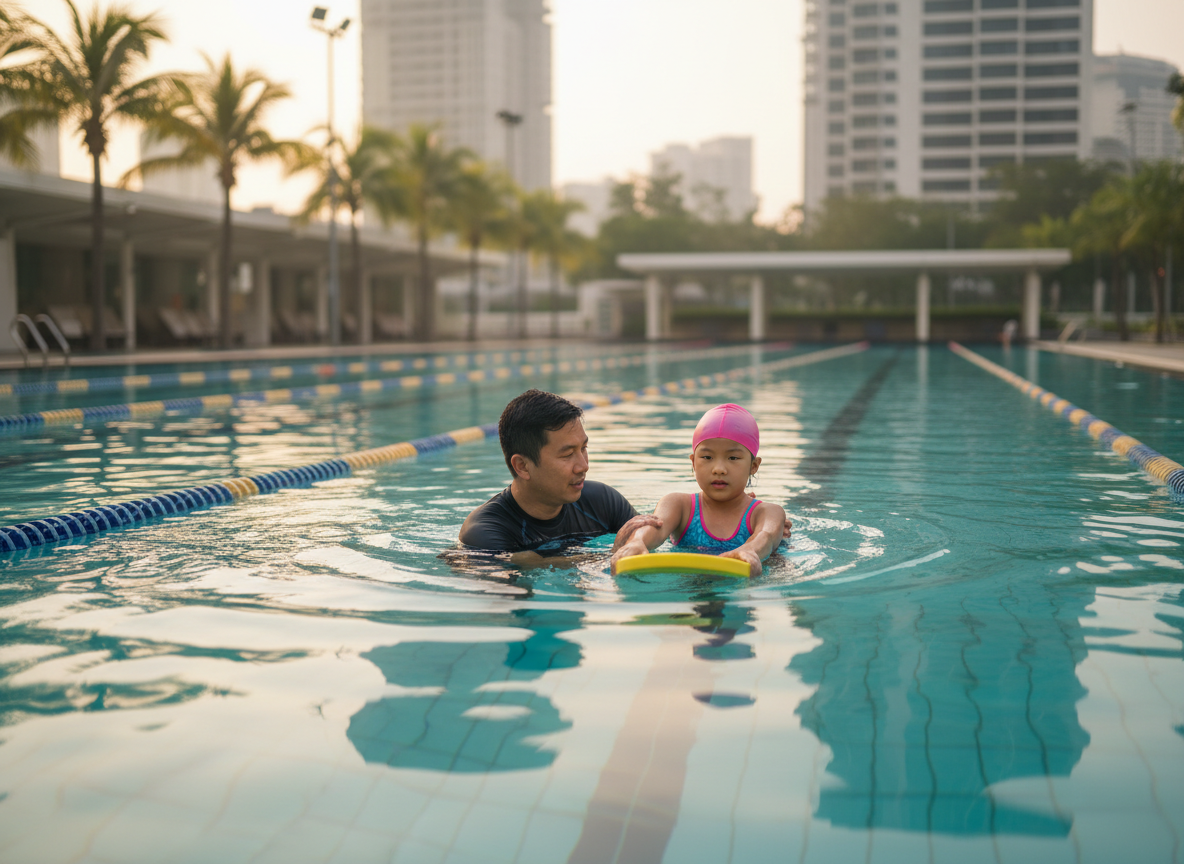
One-to-one or small-group lessons work best in calm, shallow, warm-ish water with few distractions. A community pool at a quiet time can offer exactly that, often at a fraction of the cost of a specialist facility. The trade-off is that these pools get crowded, so timing is everything.
1. Choose an off-peak slot. Early mornings and weekday mid-mornings are usually far quieter than weekend afternoons. A nervous learner needs calm, not chaos.
2. Start in the shallow pool. For any beginner — child or adult — begin where they can stand. Confidence is built in water they can control, not the deep end.
3. Keep the first lessons short. Twenty to thirty focused minutes beats an exhausting hour. Cold, tired swimmers stop absorbing anything.
4. Bring the right kit. Goggles that fit, simple floats for support during drills, and warm clothes for straight after. Skip the inflatable toys during a lesson.
5. Book a qualified instructor. A good swimming coach will structure the progression so each session builds on the last, rather than just supervising splashing.
Community pool versus specialist teaching pool
| Factor | Community pool (e.g. Atkinson Pool) | Specialist teaching pool |
|---|---|---|
| Water temperature | Often cooler, outdoor | Usually warm, indoor |
| Crowding | Busy at peak, quiet off-peak | Controlled, lesson-only |
| Shallow water for beginners | Wading pool, seasonal | Dedicated learner depth |
| Cost | Lower entry, flexible | Higher, bundled with lessons |
| Best for | Confident improvers, family practice | Nervous beginners, very young children |
Common mistakes at a community pool
- Trying to teach a frightened beginner in the busy main pool instead of the quiet shallow area.
- Booking a lesson at the most crowded time of the week, then wondering why the swimmer cannot focus.
- Relying on armbands and inflatables as if they keep a child safe — they do not.
- Letting a lesson run too long in cool water until the swimmer is shivering and switched off.
- Assuming the lifeguard is watching your child specifically. They are watching everyone.
Safety at Atkinson Pool and pools like it
Lifeguards, marked depths and a separate children’s area all help, but the responsibility for a child in the water is yours. Stay within arm’s reach of any young or non-swimming child, every second, including in the shallow pool where most incidents actually happen. Armbands, floats and inflatables are toys and can fail or slip off without warning; they are never a substitute for an adult’s hands and eyes. Never allow breath-holding contests or underwater-distance games, which can cause shallow-water blackout — a swimmer can pass out underwater with no struggle and no warning. On hot days, watch for sunburn and dehydration, and get out and warm up if a child’s lips go blue or they start shivering. If your swimmer is a genuine beginner, structured swimming lessons in shallow water are far safer than teaching yourself in open water or the deep end.
Getting the most from family pool time
Even outside formal lessons, a trip to a pool like Atkinson Pool is a chance to build water confidence. Let young children get used to putting their face in, blowing bubbles and floating with support before you push any stroke technique. Little and often works better than one big frightening session. If you want a structured path, look at how local swimming classes stage their progression, or arrange one-to-one private swimming lessons so the pace matches your swimmer exactly.
Frequently asked questions
Is Atkinson Pool a good place for beginners?
A community pool with a shallow wading area can suit beginners well, provided you use the shallow water and pick a quiet time. Confirm the current layout and opening hours with the venue first.
Can I arrange private swimming lessons at a community pool?
Often yes, though you should check the pool’s rules on outside instructors and book an off-peak slot. Quiet, shallow water is ideal for one-to-one teaching.
What should I bring for a lesson?
Well-fitting goggles, appropriate swimwear, a simple float or two for drills, a towel, and warm dry clothes for straight after. Leave inflatable toys out of the lesson.
How long should a beginner’s lesson last?
Suitable lesson length varies with age, water temperature, attention, health and current comfort. Ask the coach how the session will be adapted, and stop before fatigue causes technique or supervision to deteriorate.
Are the lifeguards responsible for my child?
Lifeguards watch the whole pool, not one child. You must actively supervise your own children and stay within arm’s reach of young or non-swimming ones.
When is the best time to visit for a calm swim?
Early mornings and weekday mid-mornings are usually the quietest. Weekend afternoons are the busiest and hardest for nervous learners.
The bottom line
Atkinson Pool, like any community pool, may be suitable for learning when current venue rules allow instruction, the chosen area fits the learner, and active supervision is maintained. Confirm access and instructor policies with the venue first. If the setting is suitable, enquire about private swimming lessons with the learner’s level and preferred timing.
🏊 From the Pool Deck — Our Coaching Experience
Having guided over 5,000 swimmers across Singapore since 2015 — from adults who feared the water to children aiming for SwimSafer Gold — every tip and recommendation in this article comes directly from our coaches’ real-world experience at poolside. We coach weekly at condominiums, public pools, and private facilities islandwide, and we update our content to reflect what we actually see working for Singapore swimmers today.
📚 Official Sources & Further Reading
About This Article
Written by the PrivateSwimming.sg coaching team — AUSTSWIM-certified instructors and Singapore Lifesaving Society (SLSS) members who have personally coached over 5,000 swimmers across Singapore since 2015, from anxious beginners to competitive teenagers preparing for SwimSafer Gold. Our coaches hold current First Aid and CPR certifications and operate under Singapore’s Child Protection (Vulnerable Persons) framework. Our swim curriculum is aligned with Sport Singapore’s SwimSafer 2.0 programme, the Singapore Swimming Association (SSA) coaching standards, and the Health Promotion Board (HPB) active living guidelines.
✔ AUSTSWIM Certified | ✔ SLSS Qualified | ✔ SwimSafer 2.0 Educators | ✔ 5,000+ Swimmers Coached Since 2015 | ✔ Sport Singapore Aligned | ✔ SSA Coaching Standards | Last reviewed: September 2026


Leave a Comment