

Singapore itself has limited diveable water, but it sits within a few hours of some of Southeast Asia’s best open water sites — Tioman, Redang, Aur, Dayang, and the Indonesian islands just across the strait. Certification through a recognised agency takes a few days. The part that takes longer, and that people consistently skip, is becoming a swimmer who is genuinely comfortable with no wall to grab.
I teach swimming, not diving. But I have watched enough capable pool swimmers freeze the first time they look down and see nothing beneath them, and I have taught enough adults who got their certification before they could reliably tread water. So this article covers both halves: where to go, and whether you are ready.
What Open Water Actually Changes
A 25-metre pool is a controlled environment. Clear water, a flat bottom, a wall every 25 metres, a lifeguard, and no current. Remove all five and the same swimmer performs differently.
The specific things that catch people out:
- No visual reference. Swimming over deep, dark water triggers anxiety in people who had no idea they had it.
- Nothing to rest on. In a pool, tiredness means grabbing the wall. In open water, tiredness means treading, floating, or signalling. If you cannot do those calmly, you have no recovery option.
- Current and chop. Water moves. Breathing to the side becomes breathing into a wave.
- Cold and fatigue interacting. Even in warm regional water, a long session drains you faster than the pool does.
- Distance judgement. The boat always looks closer than it is.
Certification: What It Covers and What It Does Not
An entry-level open water course teaches you to use scuba equipment safely to a limited depth, usually with a maximum around 18 metres. It covers mask clearing, regulator recovery, buoyancy control, buddy procedures, and ascent discipline.
It does not make you a swimmer. Most agencies require a swim assessment — typically around 200 metres unaided, any stroke, plus roughly ten minutes of treading water or floating. There is no time limit. That standard exists so that if your equipment fails at the surface, you can keep yourself alive while help arrives.
Passing it by scraping through, gasping, is not the same as meeting it. Be honest with yourself about which one you did.
Sites Within Reach of Singapore
| Site | Rough access | Suits | Notes |
|---|---|---|---|
| Batam | Short ferry | Beginners | Easiest weekend option; visibility varies |
| Bintan | Short ferry | Beginners to intermediate | Popular for first certification trips |
| Tioman | Road plus ferry, Malaysia | All levels | The default choice for Singapore divers |
| Pulau Sibu | Road plus boat, Malaysia | Beginners to intermediate | Quieter, relaxed pace |
| Pulau Aur | Longer boat transfer | Experienced | Deeper water, currents can be strong |
| Pulau Dayang | Longer boat transfer | Experienced | Deeper sites, often paired with Aur |
| Pulau Redang | East coast Malaysia | All levels | Known for clear water; good for photography |
| Pulau Payar | Near Langkawi | Beginners to intermediate | Marine park with protected reef |
| Langkawi | Flight | Intermediate | Longer trip; varied sites |
Conditions at any of these change with season, weather and monsoon timing. Ask the operator, not a blog, about the week you are actually going.
Building the Swim Competence First
- Float on your back for three minutes, breathing normally. Not thrashing — resting. If this is hard, everything else is built on sand. Work through proper floating technique before anything else.
- Tread water for ten minutes without panic. Use a slow eggbeater or a relaxed scull. The aim is sustainable, not impressive.
- Swim 200 metres continuously, any stroke. Breaststroke counts. Slow counts. Stopping does not.
- Swim 200 metres with your eyes on nothing. Close them for five strokes at a time in a lane. It is a surprisingly good simulation of low-visibility water.
- Practise sighting. Lift your eyes forward every six to eight strokes without stopping. In open water you will swim in a curve otherwise. Everyone does.
- Do a supervised sea session before the trip. Somewhere shallow, calm, with a buddy. The first time you swim over dark water should not be on holiday.
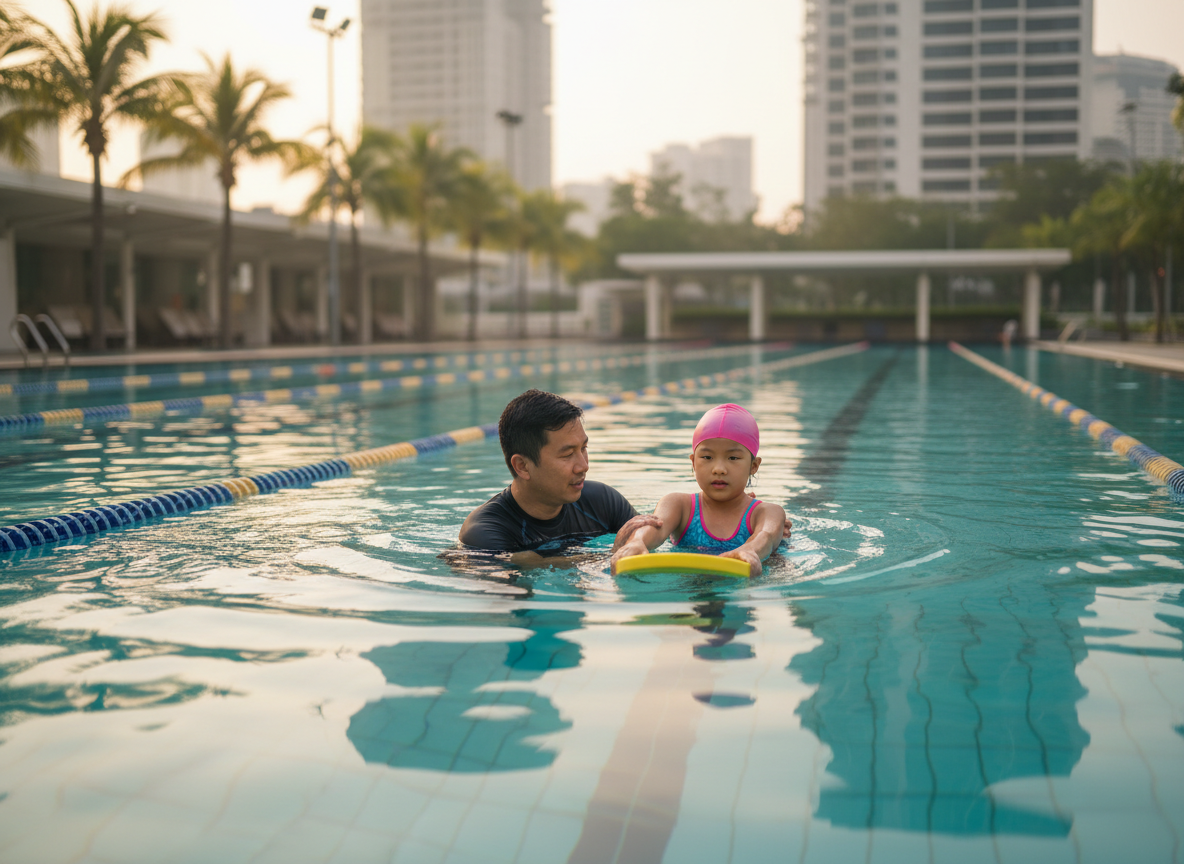
If any of the first three feel out of reach, that is a coaching problem with a coaching solution. Adults improve quickly with one-to-one instruction because there is nowhere to hide and no group to keep up with. If you would rather build general fitness first, a structured swimming class works too.
Safety, Stated Plainly
- Never dive or swim open water alone. Not once. Not in calm conditions. Not because you are experienced.
- No breath-hold games. Underwater distance swimming and hypoxic drills carry a real risk of shallow-water blackout, which gives no warning and kills strong swimmers in water they could stand up in. If you practise any breath-hold work, a dedicated buddy must be within arm’s reach watching only you.
- Alcohol and water do not mix. Not the night before a dive, not on the boat, not after. It impairs judgement and dehydrates you, and dehydration raises decompression risk.
- Equalise early and gently. Ear pain on descent means ascend slightly. Never force it.
- Children need direct adult supervision at all times. Arm floats, rings and noodles are toys. They are not safety devices, and they have contributed to drownings by giving parents false confidence.
- Ascend slowly, always. The single most common serious diving error is coming up too fast.
Common Mistakes
- Booking a certification trip before checking whether you can meet the swim assessment.
- Assuming pool fitness transfers directly. It transfers partially.
- Relying on a buoyancy aid to compensate for weak treading.
- Choosing a site by photographs rather than by matching it to your experience.
- Skipping the refresher after a long layoff. Skills decay faster than people expect.
- Diving with a cold. Blocked sinuses and pressure change are a bad combination.
Frequently Asked Questions
Do I need to be a strong swimmer to get open water certified?
Competent, not fast. Agencies generally ask for a continuous 200-metre swim and about ten minutes of treading or floating, untimed. If you can do both calmly, you meet the standard.
Can I certify in Singapore itself?
The classroom and pool components are widely available locally. The open water dives are normally completed at a regional site over a weekend trip. Operators arrange this as a package.
How is open water swimming different from open water diving?
Swimming keeps you at the surface and demands sighting, pacing and comfort with chop. Diving takes you below and adds equipment, pressure and gas management. Both demand the same underlying quality: calm.
What if I panic underwater?
Panic is common and trainable. Courses drill mask flooding and regulator recovery precisely so the response becomes automatic. If you know you are anxious in water, address that in a pool with an instructor before adding a tank to the problem.
Is regional water safe for beginners?
Many sites are well suited to beginners in the right season. Conditions vary considerably with monsoon timing, so check with the operator for your specific dates rather than relying on general reputation.
How long does open water competence take to build?
There is no reliable fixed timeline. Starting comfort, instruction quality, practice conditions and individual response all matter. Use observable milestones such as calm recovery, treading, sighting and repeatable swimming rather than a calendar promise.
The Short Version
Site conditions, operator standards, weather and personal readiness all affect an open-water experience. Before participating, confirm current conditions and entry requirements and make sure your pool skills match the activity.
If pool readiness is the gap, enquire about private swimming lessons and describe the open-water activity you are considering. Training in a pool does not replace activity-specific instruction, operator briefings or current safety guidance.


🏊 From the Pool Deck — Our Coaching Experience
Having guided over 5,000 swimmers across Singapore since 2015 — from adults who feared the water to children aiming for SwimSafer Gold — every tip and recommendation in this article comes directly from our coaches’ real-world experience at poolside. We coach weekly at condominiums, public pools, and private facilities islandwide, and we update our content to reflect what we actually see working for Singapore swimmers today.
📚 Official Sources & Further Reading
About This Article
Written by the PrivateSwimming.sg coaching team — AUSTSWIM-certified instructors and Singapore Lifesaving Society (SLSS) members who have personally coached over 5,000 swimmers across Singapore since 2015, from anxious beginners to competitive teenagers preparing for SwimSafer Gold. Our coaches hold current First Aid and CPR certifications and operate under Singapore’s Child Protection (Vulnerable Persons) framework. Our swim curriculum is aligned with Sport Singapore’s SwimSafer 2.0 programme, the Singapore Swimming Association (SSA) coaching standards, and the Health Promotion Board (HPB) active living guidelines.
✔ AUSTSWIM Certified | ✔ SLSS Qualified | ✔ SwimSafer 2.0 Educators | ✔ 5,000+ Swimmers Coached Since 2015 | ✔ Sport Singapore Aligned | ✔ SSA Coaching Standards | Last reviewed: September 2026


[…] solid pool skills first, never swim alone, and only swim at lifeguarded locations. Our guide to open water preparation covers what you need before you ever leave the […]