

If you have a little one splashing happily in the bathtub or clinging nervously to your shoulder at the condo pool, you have probably wondered when to start proper toddler swimming lessons in Singapore. It is one of the most common questions parents ask, and the honest answer is that earlier is usually better, provided the approach is gentle, playful and safety-focused. In a city where water is genuinely everywhere, from HDB town pools to almost every condominium, teaching your child to be comfortable and safe in water is less a luxury than a life skill.
This guide walks you through everything a Singapore parent needs to know: the right age to begin, what actually happens in a good toddler class, how to prepare your child, and how to choose a coach you can trust.
Why Start Swimming Early?
Drowning remains one of the leading causes of accidental death among young children worldwide, and Singapore’s abundance of pools makes early water familiarity especially valuable. The Singapore Lifesaving Society and Sport Singapore both emphasise supervision and early water competence rather than relying on any single “drown-proofing” trick. Beyond safety, lessons may support coordination and water confidence through age-appropriate practice, although outcomes vary by child.
Starting young also means water becomes normal rather than frightening. A toddler who giggles through gentle submersion at age two is far less likely to develop the deep-seated fear of water that many adults in Singapore struggle with well into their thirties.
The Benefits at a Glance
- Water safety awareness — learning to turn, reach and hold the wall.
- Physical development — swimming engages the whole body, supporting balance and gross motor skills.
- Confidence and bonding — parent-accompanied classes strengthen the child-carer relationship.
- Better sleep and appetite — many parents notice their little ones nap beautifully after a session.
What Is the Right Age to Begin?
Most swim educators agree that babies can begin water-familiarisation classes from around six months, once they have reasonable head control and have had their early vaccinations. True toddler lessons, aimed at children roughly 18 months to three years old, focus on comfort, floating, breath control and simple movement rather than formal strokes.
- 6–18 months: Parent-in-water classes centred on bonding, splashing and gentle submersion.
- 18 months–3 years: Toddler classes introducing floating, kicking and wall holds, often still with a parent nearby.
- 3–5 years: Preschool classes where children begin independent movement and basic breathing.
There is no single “correct” age. What matters more is consistency and a positive, unhurried atmosphere. A child who attends regularly and enjoys the water will always progress faster than one pushed too hard, too soon.
What Happens in a Good Toddler Class
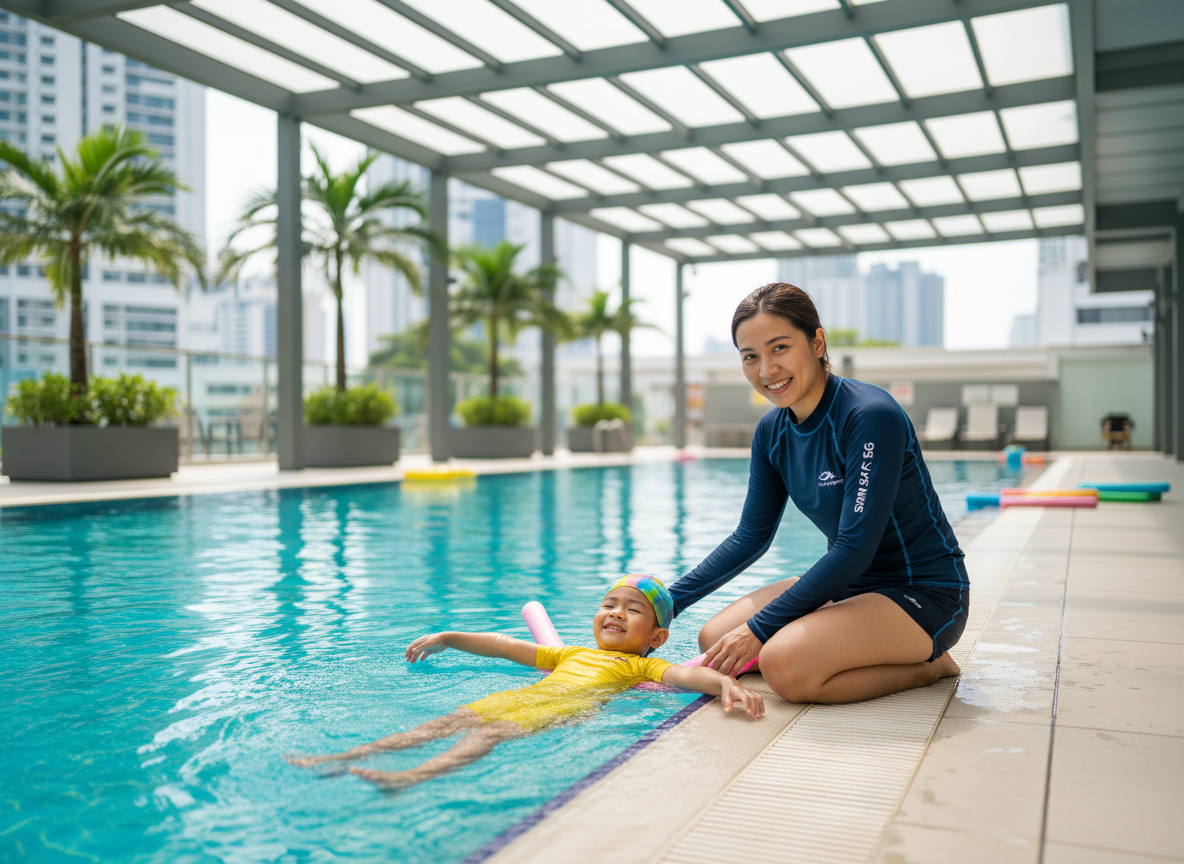
A well-run toddler session looks more like structured play than a lesson. Expect songs, floating toys, cuddles and lots of encouragement. Behind the fun, a good coach is steadily building specific skills.
Core Skills Coaches Introduce
- Water entry and exit — climbing in and out safely, and holding the pool edge.
- Breath control — blowing bubbles and brief, calm submersion.
- Back floating — one of the most important survival skills for little ones.
- Kicking and reaching — the earliest building blocks of propulsion.
Small class sizes matter enormously at this age. One coach juggling six toddlers cannot give the individual reassurance a nervous two-year-old needs. This is exactly why many Singapore parents opt for private or very small group formats. At PrivateSwimming.sg, our toddler swimming programmes keep ratios tiny so each child can receive warm, patient attention from the assigned coach. Ask the provider to confirm the coach’s current credentials and relevant toddler experience.
Preparing Your Toddler for the First Lesson
A little preparation at home makes the first session far smoother. Practise pouring water gently over your child’s head during bath time so it does not come as a shock. Talk about the pool in cheerful, excited terms in the days beforehand.
- Pack a swim nappy, towel, goggles (optional at this age) and a warm change of clothes.
- Feed your child at least an hour before the lesson to avoid discomfort.
- Arrive early so there is no rushing, which toddlers sense instantly.
- Stay calm yourself — children mirror a parent’s anxiety in the water.
Some toddlers cry during a first lesson or need more time to adjust. Responses vary; the coach should pause, adapt the activity and avoid forcing immersion or separation before the child is ready.
Public Pools, Condo Pools or Private Sessions?
Singapore parents are spoilt for choice when it comes to venues. Each option has trade-offs.
- Public pools — affordable and equipped with graduated wading areas, but often crowded and cooler.
- Condominium pools — convenient and familiar for your child, ideal for regular practice. Our condo swimming lessons bring a coach right to your development.
- Dedicated swim complexes — warmer, learner-friendly pools designed specifically for young children.
For toddlers especially, water temperature is a big deal. Little bodies lose heat quickly, so a warmer condo or learner pool often produces a happier, longer-lasting lesson than a large, cool public pool.
Choosing the Right Coach
The single most important factor in early swimming is the coach. You want someone certified, patient and genuinely warm with small children. Ask about qualifications, experience with toddlers specifically, and how they handle a crying or reluctant child.
Reputable coaches are usually part of established networks. It is worth looking at established providers such as Swim2u Swim School, browsing Singapore swimming lessons listings, and comparing swimming classes options before you commit. If you are searching for something close to home, a swimming near me search or a directory of qualified swimming coaches can help you shortlist. Parents who value professional pathways may also appreciate that many coaches are trained through a formal swimming instructor course, which raises the overall standard of teaching.
For families weighing venues, resources like swimming complex guides and condo swimming specialists are useful, and international standards are reflected by organisations such as Swim Schools International. Children with additional needs can find dedicated support through special needs providers, and you can always compare private options directly at PrivateSwimming.sg.
How PrivateSwimming.sg Can Help
We offer private, condo, kids, adult, ladies-only and special-needs lessons with certified coaches and flexible scheduling right across Singapore. Whether your toddler is taking their very first dip or your older child is ready for kids’ swimming lessons, we match each family with a coach who suits their pace and personality. Adults looking to catch up can explore our adult swimming lessons too.
PrivateSwimming.sg is part of a wider sister network of Singapore service providers — including home tuition, aircon servicing and digital marketing specialists — so you are dealing with an established, trusted local group. Ready to begin? Contact us and we will help you find the perfect fit.
Frequently Asked Questions
What age can my toddler start swimming lessons in Singapore?
Water-familiarisation classes can begin from about six months, while dedicated toddler lessons typically start between 18 months and three years. The key is a gentle, play-based approach.
Is it safe to submerge a toddler underwater?
Brief, controlled submersion guided by a trained coach is safe and helps develop natural breath control. It should always be gradual, calm and never forced.
How long should a toddler swimming lesson last?
Around 30 minutes is ideal. Toddlers tire and get cold quickly, so short, positive sessions work far better than long ones.
Do toddlers need to wear goggles?
Not necessarily. Many coaches prefer toddlers learn to open their eyes and blow bubbles without goggles first, though goggles can be introduced as they grow more confident.
What should my child wear in the pool?
A swim nappy is essential for children who are not toilet-trained, worn under a swimsuit. Bring a warm towel and a change of clothes for afterwards.
My toddler cries in the water — should I stop?
Not usually. Some tears are normal as your child adjusts. With patience and consistency, most toddlers settle within a few sessions. A good coach will guide you through it.
How often should my toddler have lessons?
Once a week is a solid foundation, but twice weekly, or supplementary practice at your condo pool, accelerates progress and keeps the skills fresh.
Conclusion
Toddler swimming lessons can be one useful part of early water familiarisation, alongside active adult supervision and safe pool access. Start gently, choose a warm and patient coach, keep sessions short and positive, and let your little one fall in love with the water at their own pace. With Singapore’s pools around every corner, a confident young swimmer is a gift that lasts a lifetime.
🏊 From the Pool Deck — Our Coaching Experience
Having guided over 5,000 swimmers across Singapore since 2015 — from adults who feared the water to children aiming for SwimSafer Gold — every tip and recommendation in this article comes directly from our coaches’ real-world experience at poolside. We coach weekly at condominiums, public pools, and private facilities islandwide, and we update our content to reflect what we actually see working for Singapore swimmers today.
📚 Official Sources & Further Reading
About This Article
Written by the PrivateSwimming.sg coaching team — AUSTSWIM-certified instructors and Singapore Lifesaving Society (SLSS) members who have personally coached over 5,000 swimmers across Singapore since 2015, from anxious beginners to competitive teenagers preparing for SwimSafer Gold. Our coaches hold current First Aid and CPR certifications and operate under Singapore’s Child Protection (Vulnerable Persons) framework. Our swim curriculum is aligned with Sport Singapore’s SwimSafer 2.0 programme, the Singapore Swimming Association (SSA) coaching standards, and the Health Promotion Board (HPB) active living guidelines.
✔ AUSTSWIM Certified | ✔ SLSS Qualified | ✔ SwimSafer 2.0 Educators | ✔ 5,000+ Swimmers Coached Since 2015 | ✔ Sport Singapore Aligned | ✔ SSA Coaching Standards | Last reviewed: September 2026
Leave a Comment