

Pregnancy Swim Suits: What to Wear for Lessons
Buy a pregnancy swim suit that is built for swimming, not for photographs. That means a one-piece or a high-waisted tankini in chlorine-resistant fabric, with real bust support, wide straps that do not dig, and a body that stretches over the bump rather than gripping it. Buy your pre-pregnancy size in a maternity cut rather than sizing up in a standard suit. And buy it once you are actually showing — not at eight weeks.
I coach pregnant swimmers regularly and the equipment complaints are always the same three. The straps cut into the shoulders. The suit rides up over the bump on every push-off. The chlorine ate it in six weeks. All three are solved at the point of purchase.
What Swimming Asks of a Suit

A suit worn beside the pool needs to look good and stay on. A suit worn swimming needs to survive a wall push-off, a backstroke arm, forty minutes of chlorine, and a body that will change shape again next month.
The difference shows in three places. The fabric: polyester and PBT hold up in chlorinated water for years, while the nylon-elastane blends used in most fashion swimwear go baggy and translucent within a season. The straps: wide, adjustable, and ideally crossed or racer-backed, because a growing bust plus a thin strap equals shoulder pain. The torso length: maternity cuts add length as well as width, which is what stops the suit crawling upwards.
Styles Compared
| Style | Good for | Watch out for |
|---|---|---|
| Maternity one-piece | Lap swimming, lessons, all trimesters | Torso length — too short and it rides up |
| High-waisted tankini | Easy changing, toilet trips, adjustable coverage | Top riding up on push-offs; look for a long cut |
| Racerback training suit, sized up | Early pregnancy, strong swimmers | Compression across the bump later on |
| Bikini or two-piece | Comfort, sun, shallow water | Little support; not practical for lengths |
| Rash guard over any of the above | Outdoor pools, sun protection | Adds drag; buy a swim-specific one, not a t-shirt |
Buying Across Three Trimesters

- First trimester. Your usual suit will very likely still fit. Bust changes arrive before bump changes, so if anything is uncomfortable it will be the chest. Wait before you spend.
- Second trimester. This is when to buy properly. Choose a maternity cut in your pre-pregnancy size, with a stretch panel rather than a fixed pouch. Try it on and reach both arms overhead — if the suit pulls down at the shoulders, it is too short in the body.
- Third trimester. The suit you bought in the second trimester should still work if the panel was generous. Many swimmers add a second, roomier suit. Prioritise getting in and out easily over anything else.
A practical note nobody mentions: you will need the toilet, often, and a one-piece is a nuisance. Tankinis exist for this reason.
Common Mistakes
- Sizing up in a normal swimsuit. You get a wider suit, not a longer one, and it will roll off your shoulders.
- Buying fashion swimwear for lap swimming. Chlorine destroys it and it offers no bust support.
- Thin spaghetti straps. Six weeks of a heavier bust and they will hurt.
- Buying too early. Your shape at fourteen weeks is not your shape at thirty.
- Ignoring the shoulder test. Reach overhead in the changing room. Always.
- Skipping the rinse. Rinse in fresh water and dry flat in the shade. Never wring it out.
- Wearing a maternity support band under the suit. It bunches, holds water and drags.
Safety in the Water While Pregnant

Swimming is widely regarded as one of the more comfortable ways to stay active during pregnancy, because the water carries your weight. That said, this is a swimming coach writing, not a doctor. Talk to your midwife or obstetrician before starting or continuing any exercise programme, and follow their advice over anything you read here.
A few things I do insist on with pregnant swimmers:
- The pool deck is slippery and your balance has changed. Walk. Use the steps and the handrail rather than climbing out on your arms.
- No diving, no jumping in. Enter feet first, always.
- Never hold your breath or do underwater lengths. Breath-holding is unwise for any swimmer — it can cause shallow-water blackout — and there is no reason to attempt it while pregnant.
- Avoid overheating. Hot outdoor pools in the Singapore afternoon, hot tubs and saunas are best avoided. Cool water, cooler hours.
- Drink. You dehydrate in the water without noticing.
- Stop for pain, dizziness, contractions, bleeding or fluid loss and contact your doctor. Do not finish the set.
- Breaststroke can aggravate pelvic girdle pain. If your hips or pubic bone hurt, switch to freestyle or backstroke and speak to a physiotherapist. Do not push through it.
Getting Back in the Pool
If you have not swum since school, pregnancy is a reasonable time to start — the water is kind and the effort is self-limiting. It is also a good time to have somebody watching your stroke, because a poor breaststroke will find your hips. Some swimmers prefer individual attention while others prefer a group. If you have medical clearance and want to discuss lesson setting, privacy or stroke adaptations, enquire about private swimming lessons and state that you are pregnant so suitability can be discussed.
Public pool timings and quieter off-peak hours are listed by ActiveSG.
Frequently Asked Questions
When should I buy a pregnancy swim suit?
Buy one when your current suit no longer feels secure or comfortable for the movement you plan to do. Timing and fit changes vary by person; follow the brand’s measurements and return policy.
Do I need a maternity-specific suit at all?
Not necessarily. A maternity-specific design may provide extra torso room or adjustability, but any secure, comfortable, swim-appropriate suit that fits your changing body may work.
What fabric lasts in a chlorinated pool?
Polyester or PBT blends. Nylon-elastane fashion swimwear degrades quickly in chlorine and loses shape.
Can I wear a bikini while pregnant?
You can if it fits securely and supports the movement you intend to do. Test comfort and coverage during arm movements and a gentle push-off rather than assuming a particular style will or will not work.
Is it safe to swim in the third trimester?
Many women swim comfortably until close to their due date, but this is a question for your doctor or midwife, who knows your pregnancy. Stop if anything hurts.
How do I stop my suit going baggy?
Rinse it in cold fresh water after every swim, dry it flat out of direct sun, never wring it, and rotate two suits if you swim often.
🏊 From the Pool Deck — Our Coaching Experience
Having guided over 5,000 swimmers across Singapore since 2015 — from adults who feared the water to children aiming for SwimSafer Gold — every tip and recommendation in this article comes directly from our coaches’ real-world experience at poolside. We coach weekly at condominiums, public pools, and private facilities islandwide, and we update our content to reflect what we actually see working for Singapore swimmers today.
📚 Official Sources & Further Reading
About This Article
Written by the PrivateSwimming.sg coaching team — AUSTSWIM-certified instructors and Singapore Lifesaving Society (SLSS) members who have personally coached over 5,000 swimmers across Singapore since 2015, from anxious beginners to competitive teenagers preparing for SwimSafer Gold. Our coaches hold current First Aid and CPR certifications and operate under Singapore’s Child Protection (Vulnerable Persons) framework. Our swim curriculum is aligned with Sport Singapore’s SwimSafer 2.0 programme, the Singapore Swimming Association (SSA) coaching standards, and the Health Promotion Board (HPB) active living guidelines.
✔ AUSTSWIM Certified | ✔ SLSS Qualified | ✔ SwimSafer 2.0 Educators | ✔ 5,000+ Swimmers Coached Since 2015 | ✔ Sport Singapore Aligned | ✔ SSA Coaching Standards | Last reviewed: September 2026
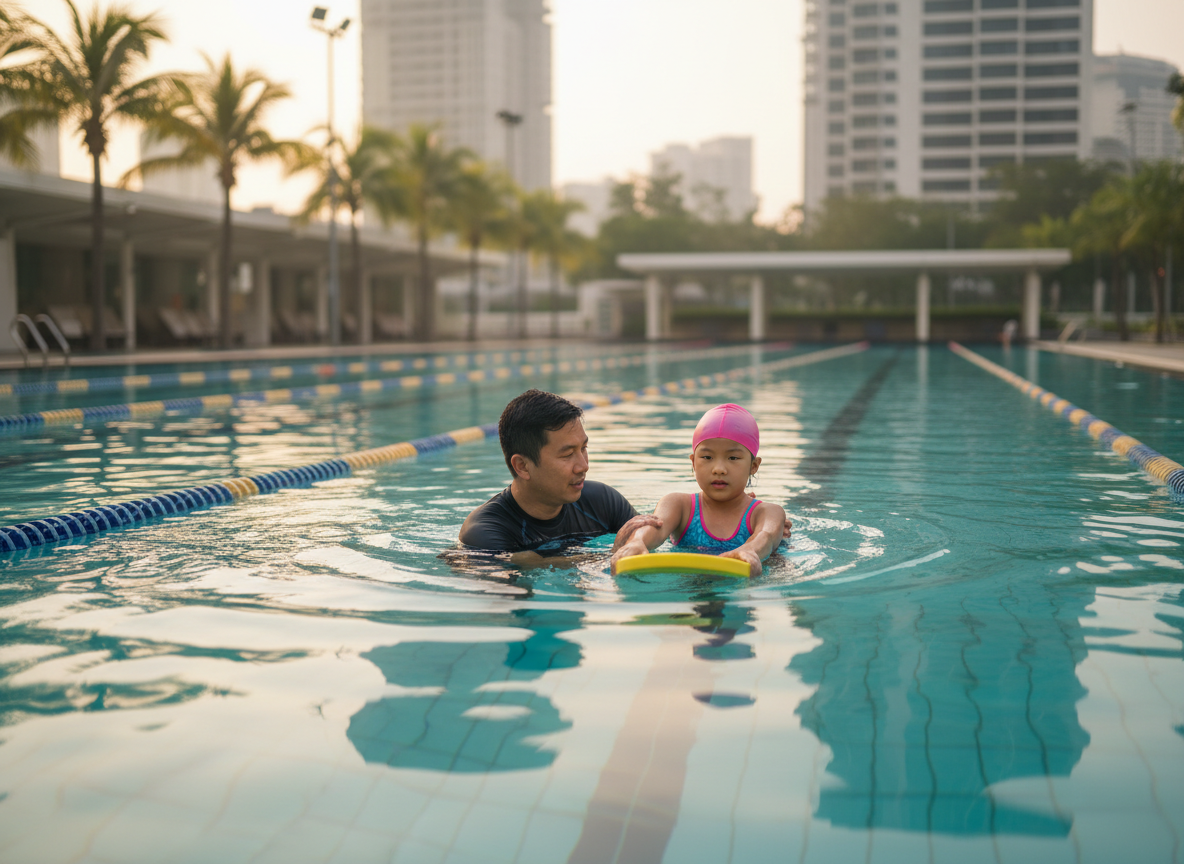


[…] We cover swimwear properly in choosing pregnancy swim suits. […]
[…] A maternity-cut one-piece or a long-bodied tankini in polyester or PBT will survive chlorine and stay put. Reach both arms overhead in the changing room — if the suit pulls down at the shoulders, it is cut too short in the body. We cover this properly in choosing pregnancy swim suits. […]
[…] A maternity-cut one-piece or a long-bodied tankini in polyester or PBT will survive chlorine and stay put on a push-off. Fashion swimwear will not. Reach both arms overhead in the changing room; if the suit pulls down at the shoulders it is too short in the body. We have written in detail about choosing pregnancy swim suits for lessons. […]
[…] can read about modest swimwear you can actually swim in, and about maternity swimwear built for lengths. For learners wanting company rather than solitude, small-group swimming classes work well, and […]
[…] Pool sandals are worth it, because slipping is the risk you most want to eliminate. Our guide to pregnancy swimwear covers fit in more […]