

Renewable Energy Systems for Pools: Warmer, Greener Swimming
The most practical renewable energy systems for a swimming pool are solar water heating and solar-powered pumps: they cut running costs and carbon while keeping the water at a comfortable temperature for year-round swimming. A pool is one of the more energy-hungry things a home or condo can own, so this is where going green actually pays back. Here’s how it works for swimmers and pool owners.
Why Pools and Renewable Energy Fit Together
Heating and filtering water is what makes a pool expensive to run. Because Singapore has strong, consistent sunshine, solar is a natural match — the same sun that warms the deck can warm the water and power the pump. That means comfortable swimming temperatures without a large power bill, and a much smaller carbon footprint for a facility that’s used every day.
The Main Options
- Solar pool heating. Water is pumped through roof-mounted collectors and warmed by the sun before returning to the pool. Simple and effective in a sunny climate.
- Solar photovoltaic (PV). Panels generate electricity that can run the pump, lighting and heating, offsetting grid power.
- Solar pool pumps. Filtration is often the biggest ongoing cost; a solar-assisted pump trims it directly.
- Pool covers. Not a generator, but a cover slashes heat and evaporation loss, so every other system works less.
Comparing the Approaches
| System | Best for | Main benefit |
|---|---|---|
| Solar heating | Comfortable water year-round | Warmth with low running cost |
| Solar PV | Cutting overall electricity use | Offsets pump and lighting power |
| Solar pump | Reducing filtration cost | Lower daily energy bill |
| Pool cover | Every pool | Retains heat, cuts evaporation |

Common Mistakes

- Installing heating but skipping a cover, so most of the warmth escapes overnight.
- Undersizing the system for the pool’s volume.
- Forgetting that filtration, not just heating, drives running costs.
- Neglecting maintenance, which quietly erodes efficiency.
- Assuming any roof suits solar without checking orientation and shading.
Comfort and Safety for Swimmers

Warmer water is more comfortable for lessons and for older or nervous swimmers, but it shouldn’t be too warm — above the low 30s Celsius, hard swimming raises the risk of overheating. Keep any heating system serviced so temperatures stay stable, and never let equipment upgrades distract from the basics of pool safety: clear water, secure fencing and proper supervision. A greener pool should still be a safe one.
Frequently Asked Questions
Do solar pool heaters work in Singapore?
Yes. The consistent tropical sunshine makes solar heating one of the more reliable options here.
Will renewable energy systems save money on a pool?
Over time, generally yes — heating and filtration are the big costs, and solar reduces both after the upfront outlay.
What’s the single best upgrade for an efficient pool?
A good pool cover. It retains heat and cuts evaporation, so every other system does less work.
Can solar power run my pool pump?
Yes, solar-assisted or solar-powered pumps can handle filtration, which is often the largest ongoing energy cost.
How warm should a swimming pool be?
Comfortable lesson temperatures sit in the high 20s Celsius. Much warmer than the low 30s makes hard swimming uncomfortable.
Is warmer water better for learning to swim?
Yes, gently warm water helps beginners and children relax, which makes lessons more productive.
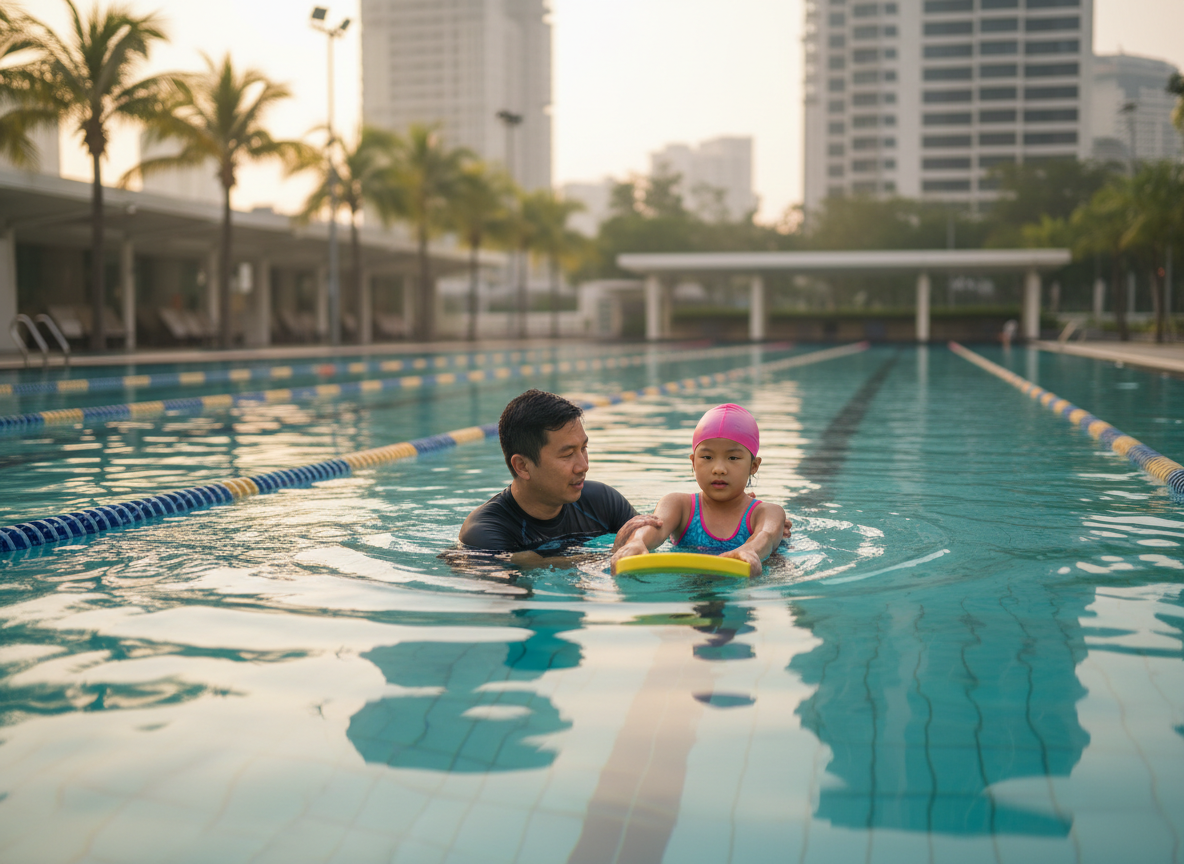
If you’re choosing a pool for lessons, comfortable water matters: our private swimming lessons and partner swimming classes use suitable pools, and you can find lessons near you.
🏊 From the Pool Deck — Our Coaching Experience
Having guided over 5,000 swimmers across Singapore since 2015 — from adults who feared the water to children aiming for SwimSafer Gold — every tip and recommendation in this article comes directly from our coaches’ real-world experience at poolside. We coach weekly at condominiums, public pools, and private facilities islandwide, and we update our content to reflect what we actually see working for Singapore swimmers today.
📚 Official Sources & Further Reading
About This Article
Written by the PrivateSwimming.sg coaching team — AUSTSWIM-certified instructors and Singapore Lifesaving Society (SLSS) members who have personally coached over 5,000 swimmers across Singapore since 2015, from anxious beginners to competitive teenagers preparing for SwimSafer Gold. Our coaches hold current First Aid and CPR certifications and operate under Singapore’s Child Protection (Vulnerable Persons) framework. Our swim curriculum is aligned with Sport Singapore’s SwimSafer 2.0 programme, the Singapore Swimming Association (SSA) coaching standards, and the Health Promotion Board (HPB) active living guidelines.
✔ AUSTSWIM Certified | ✔ SLSS Qualified | ✔ SwimSafer 2.0 Educators | ✔ 5,000+ Swimmers Coached Since 2015 | ✔ Sport Singapore Aligned | ✔ SSA Coaching Standards | Last reviewed: September 2026


Leave a Comment